Maintenance
How San Antonio Hard Water Affects Your HVAC System
Key Takeaways
- •San Antonio water averages 15 to 22 grains per gallon, which is considered very hard and leads to rapid mineral scaling.
- •Mineral buildup on cooling coils can cause a 30 percent spike in your monthly energy bills by acting as an insulator.
- •Hard water deposits can clog condensate drain lines, leading to potential water damage and system shutdowns during 90 degree days.
- •Regular maintenance during the Spring Refresh window can prevent the efficiency loss caused by San Antonio limestone deposits.
- •Upgrading to high efficiency systems can qualify you for CPS Energy rebates ranging from 100 to 275 dollars per ton.
Howdy, neighbor. It is a real scorcher out there today. I am looking at the thermometer right now and it is hitting 90 degrees. That is a far cry from the 76 degrees we usually see this time of year in San Antonio. If you are feeling the heat, you are not alone. Our team here at Wrangler Air Conditioning has been running around all day helping folks get their systems ready for this early summer weather. We have been a family owned business since 2014, and if there is one thing we know, it is that San Antonio weather and San Antonio water do not play nice with your AC unit. You might be focused on the heat, but the real silent killer of your home comfort is actually flowing through your pipes and sitting in your air. We are talking about hard water.
When we talk about hard water, we are talking about the high mineral content that comes from our local limestone. It is what makes our water taste like San Antonio, but it is also what leaves that white, crusty film on your shower heads and faucets. In our neck of the woods, the water hardness measures between 15 and 22 grains per gallon. To put that in perspective, anything over 10 grains is considered very hard. That liquid rock does a number on your plumbing, but most people do not realize it is also picking a fight with your HVAC system. With CPS Energy looking at a 4 percent rate hike and SAWS proposing an 8 percent increase, you cannot afford to let your AC run poorly. You need every bit of efficiency you can get.
Why San Antonio Hard Water is Hard on Your AC
You might wonder how water gets into your air conditioner in the first place. Your AC does more than just cool the air: it removes humidity. As that warm, humid San Antonio air passes over the cold evaporator coils, moisture condenses into water droplets. In a perfect world, that water is pure. But in reality, the dust, pollen, and minerals in our environment get mixed in. When you have hard water in your home, even the moisture in the air can carry traces of those minerals. Over time, these minerals settle on the coils and inside the drain lines. It creates a hard, scaly layer that is tough to remove. This is especially true during our Spring Refresh window when the air is thick with cedar and oak pollen.
This scale buildup acts like a thermal blanket. Think about it this way: if you put a thick wool coat on your AC coils, they cannot do their job of absorbing heat. Calcium and magnesium deposits are excellent insulators. They prevent the refrigerant inside the coils from cooling the air effectively. This means your system has to work harder and run longer to reach the temperature you set on the thermostat. When your system runs longer, your electric bill goes up. With the projected cost of electricity hitting 13.6 cents per kWh this month, those extra minutes of run time add up fast. We have seen cases where a simple layer of scale caused a 30 percent jump in energy usage. That is money straight out of your pocket and into the utility company's hands.
The Hidden Danger of Clogged Condensate Lines
The most common way hard water ruins a San Antonio afternoon is through a clogged condensate drain line. That moisture we talked about earlier has to go somewhere. It drips into a pan and flows out through a small PVC pipe. When you have high mineral content and local dust mixing in that pan, it creates a sludge. Eventually, that sludge hardens into a mineral plug. It is like a clogged artery for your house. When the water cannot drain, it backs up. If you are lucky, your system has a safety switch that shuts everything down before a flood happens. If you are unlucky, that water overflows into your attic or through your ceiling.
- •White crusty buildup around the drain pan or the exit of the drain line.
- •Water marks on your ceiling or damp spots near your indoor unit.
- •The AC unit turns off and won't turn back on, which often means the float switch is triggered.
- •A musty or damp smell coming from your vents when the air is blowing.
- •Visible ice on the copper lines or the indoor coil itself.
We see this all the time during these early heat waves. Folks turn on their AC for the first time in months, and the sudden rush of moisture breaks loose old mineral deposits that have dried up over the winter. These chunks of scale get stuck in the elbows of the drain pipe. It is a simple problem that causes a massive headache. A little bit of honest maintenance can clear those lines out before the real 100 degree days get here. We always tell our neighbors that a clean drain line is the best insurance against a ruined ceiling.
Efficiency Loss and the 30 Percent Penalty
Let's talk about the real cost of that mineral scale. The Department of Energy has found that even a thin layer of scale can reduce HVAC efficiency by a significant margin. In San Antonio, where our water is exceptionally hard, that loss can hit 30 percent. If your bill is usually 200 dollars, you are paying an extra 60 dollars every month just because of rock buildup on your coils. Over a long Texas summer, that is hundreds of dollars wasted. It is not fair to your family budget, and it is not good for the life of your equipment. A system that has to work 30 percent harder is going to break down much sooner than a system that stays clean.
When your system is struggling with scale, it also puts a strain on the compressor. The compressor is the heart of your AC, and it is the most expensive part to replace. If it has to push harder because the coils are blocked by minerals, it runs hotter. Heat is the enemy of mechanical parts. By letting hard water scale go unchecked, you are basically shortening the life of your unit by several years. We want your system to last as long as possible. That is why we focus on straightforward cleaning methods that remove those deposits without damaging the delicate fins on your coils.
Spring Refresh: The Best Time for Maintenance
We are currently in what we call the Spring Refresh window. This is that narrow gap of time before the summer heat becomes permanent. With today's high of 90 degrees, that window is closing fast. This is the perfect time to have a professional look at your system. We do not just glance at it: we get in there and scrub away the winter debris and the mineral buildup. We check the condensate lines for any signs of calcification. We make sure the outdoor unit is clear of the dust and pollen that likes to stick to the moist surfaces and harden into a shell.
Maintenance is not a luxury. It is a reliable way to keep your home comfortable and your bills low. During a standard checkup, we also look at your refrigerant levels. If your system is low on refrigerant and has scale on the coils, it is a double whammy. It will run almost constantly without ever making the house feel cool. We want to catch those things now while the weather is still somewhat breezy. Once we hit July and August, a breakdown becomes an emergency. Getting it handled in March or April is a smart, fair way to protect your home.
CPS Energy Rebates and High Efficiency Options
If your system is older and already heavily damaged by years of hard water and San Antonio heat, it might be time to think about an upgrade. The good news is that there are some great incentives available right now. CPS Energy offers Casa Verde rebates for high efficiency heat pump upgrades. These rebates range from 100 to 275 dollars per ton. For a standard four ton unit, that could be over 1,000 dollars back in your pocket. These modern systems are built to handle our climate better and are much easier to keep clean.
When we install a new system, we talk to our customers about how to prevent the same hard water issues from happening again. Sometimes that means suggesting a whole home water softener to reduce the minerals in the air and water around the house. Other times, it just means setting up a dependable maintenance schedule. We are not here to sell you something you do not need. We are here to give you the honest facts so you can make the best choice for your family. A new, efficient system combined with soft water can lower your utility bills significantly, especially with the rate hikes coming from CPS and SAWS.
Signs Your HVAC System Needs Help Right Now
Since it is 90 degrees today, your AC is likely running for the first time in a while. I want you to go stand by your indoor unit and listen. If you hear a gurgling sound, that is a sign that your condensate line is partially blocked by mineral scale. If you hear a whistling sound, your coils might be so clogged with scale and dust that the air cannot pass through them easily. These are the early warning signs of a system in distress. Do not wait for it to stop blowing cold air entirely. By the time that happens, the damage might be much more expensive to fix.
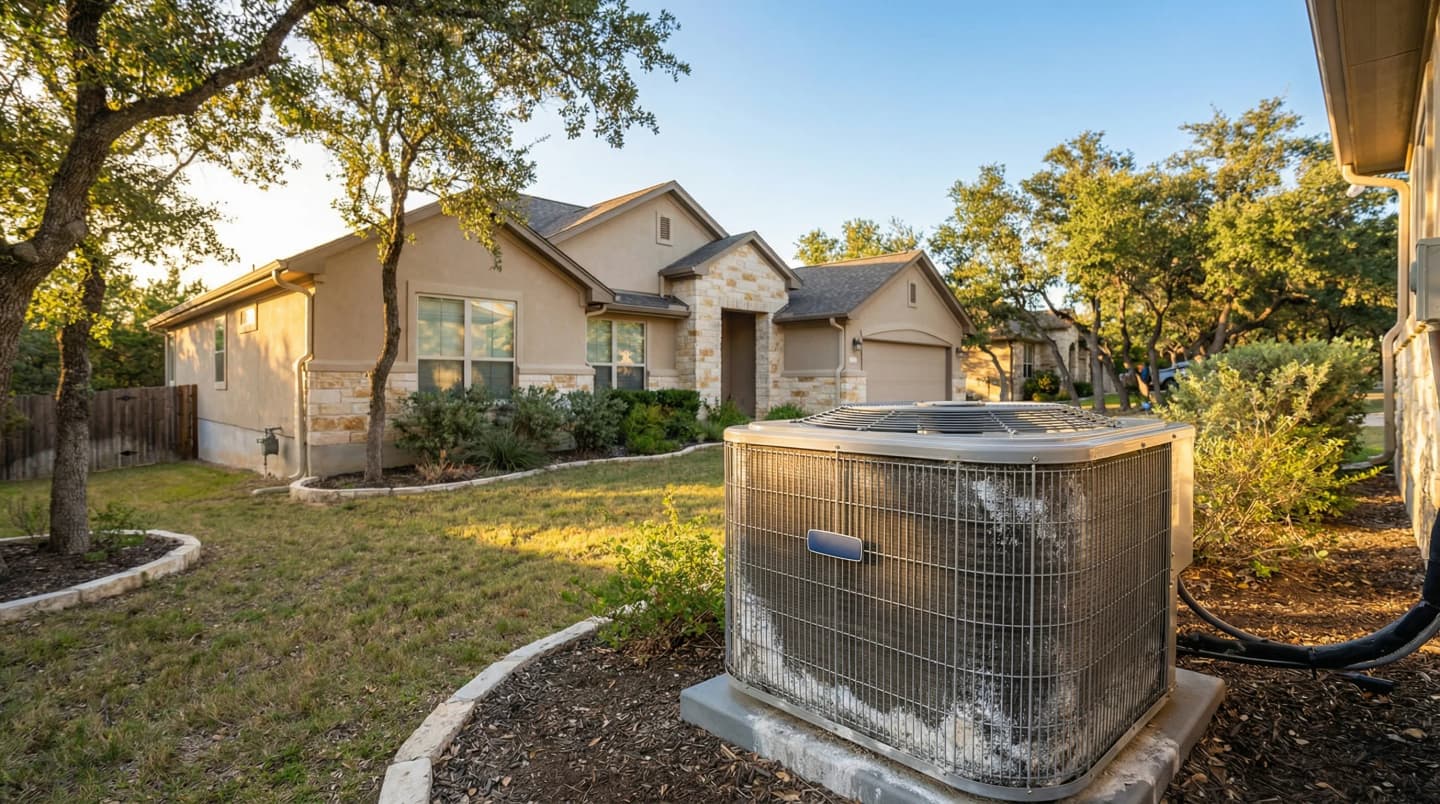
Another thing to check is your outdoor unit. Take a look at the metal fins. If you see a white, chalky substance that does not wash away with a garden hose, that is calcium scale. Do not try to scrub it off with a wire brush, as you will bend the fins and cause even more problems. That requires a professional cleaning solution that can dissolve the minerals without eating away at the aluminum. We have the right tools to do that safely. We have been doing this since 2014, and we have seen just about every type of scale buildup you can imagine.
The Wrangler Way: Honest Advice for Our Neighbors
At Wrangler Air Conditioning, we treat every house like it belongs to our own family. We are a local, family owned business, and we know that trust is earned, not given. When we come out to your home, we are going to give you a straightforward assessment of what is going on. If your system just needs a good cleaning to get rid of that hard water scale, that is what we will tell you. We are not going to push a whole new unit if a simple repair or maintenance visit will do the trick. We believe in being fair and dependable because that is how you build a business that lasts in San Antonio.
Our city is growing fast, and utility costs are going up right along with it. We want to help you keep your hard earned money. Keeping your HVAC system free of hard water damage is one of the easiest ways to do that. Whether you need a quick checkup or you are looking for a more efficient system to beat the CPS rate hikes, we are here to help. Give us a call and let us take a look. We will make sure your home stays a comfortable sanctuary, no matter how hard the water is or how high the temperature climbs. Stay cool, San Antonio.
“I have seen units less than five years old look like they have been sitting in a salt mine because of our local water. It is not about buying the most expensive system: it is about taking care of the one you have with honest, regular maintenance.”
- Tex, the "Comfort Cowboy"
Frequently Asked Questions
Does hard water really affect an air conditioner?
Yes, hard water affects your AC by creating mineral scale on the evaporator coils and clogging the condensate drain lines. This scale acts as an insulator, making it harder for the system to cool your home and increasing your energy bills by up to 30 percent.
How do I know if I have mineral buildup in my AC?
Common signs include a white, crusty residue on your outdoor unit, gurgling noises in your drain lines, a decrease in cooling power, and a sudden increase in your monthly electric bill. You might also notice the system running longer than usual to reach the set temperature.
Can I clean the hard water scale off my AC myself?
It is not recommended to scrub the coils yourself. The fins are very delicate and easily bent. Professional technicians use specialized, non-acidic cleaners that safely dissolve calcium and magnesium deposits without damaging the metal components of your system.
Will a water softener help my HVAC system?
While a water softener primarily helps your plumbing and appliances that use liquid water, it can indirectly help your HVAC by reducing the mineral dust in your home. However, regular HVAC maintenance is still the most effective way to manage scale buildup on the coils and in the drain lines.
Related Services
AC Maintenance
The $89 tune-up that saves you from the $3,000 emergency. San Antonio families count on us to keep their systems running year after year.
AC Repair
When the AC quits on a San Antonio summer day, we're the call your neighbors make. Same-day service, upfront pricing, done right the first time.
Indoor Air Quality
San Antonio's humidity is the hidden enemy. Air filtration, purification, and dehumidifiers that actually make a difference.
Related Articles
The Real Cost of Skipping Your Annual AC Maintenance in San Antonio
Learn why skipping an annual AC tune-up in San Antonio costs more in 2026. Avoid high energy bills and expensive repairs with honest advice from Tex.
How to Keep Your Home Comfortable During a San Antonio Power Outage
Learn how to stay cool during a San Antonio power outage. Expert advice from Wrangler AC on managing record heat and grid stress without your air conditioner.
How San Antonio's Hard Water Damages Your HVAC System
Learn how San Antonio water quality affects your AC. Discover how hard water causes HVAC damage and how to save on energy bills. Call Wrangler AC today!
Need HVAC Help?
Our expert technicians are ready to help with any heating or cooling needs.