
Maintenance
How San Antonio's Hard Water Damages Your HVAC System
Key Takeaways
- •San Antonio water averages 15 to 21 grains per gallon, making it some of the hardest in the country.
- •Hard water minerals can build up on AC components and increase your energy bills by up to 30 percent.
- •The combination of high pollen and mineral heavy condensate can lead to frequent drain line clogs.
- •CPS Energy rebates between 100 and 275 dollars per ton are available for high efficiency upgrades this spring.
- •Regular maintenance is the best way to prevent scale buildup before the 90 degree heat arrives this weekend.
Howdy, neighbors. It has been a bit of a wild morning here in San Antonio. We started Tuesday, March 17, 2026, with a light freeze across the Hill Country and the I-35 corridor. Seeing the frost on the grass when it was 36 degrees at dawn might have had you reaching for the heater. But by this afternoon, we are looking at a beautiful 66 degrees with clear blue skies. This is what we call weather whiplash. It is that time of year where you might use the furnace in the morning and the air conditioner by the evening. The real story, though, is what is coming later this week. Forecasters are telling us to get ready for 90 degree heat by Friday and Saturday. That is a massive jump in just a few days, and it means your cooling system is about to go from zero to sixty in a hurry.
While you are getting ready for that first real heat wave of the year, there is a hidden problem you need to think about. It is something we deal with every single day here in San Antonio: our water. We have some of the hardest water in the entire United States. While that water is great for our local economy and comes from the reliable Edwards Aquifer, it can be a real headache for your home's mechanical systems. Most folks know that hard water is tough on dishwashers and water heaters, but many do not realize it can actually damage your HVAC system too. As a family owned business that has been serving this community since 2009, we have seen exactly what these minerals can do to a perfectly good air conditioner.
Understanding San Antonio Water Quality and Your AC
To understand the problem, we have to look at the numbers. San Antonio water hardness typically averages between 15 and 21 grains per gallon. To put that in perspective, anything over 10.5 grains is considered very hard. We are well above that mark. This hardness comes from calcium and magnesium that the water picks up as it filters through the limestone of the aquifer. It is natural, but it is also persistent. When this water evaporates or sits in your system, it leaves behind those minerals in the form of limescale. You have probably seen that white, crusty buildup on your showerhead or your kitchen faucet. That same process is happening inside your air conditioning system, specifically where moisture is involved.
Your AC unit does more than just cool the air. It also removes humidity. As the warm, humid San Antonio air passes over the cold evaporator coil inside your home, moisture condenses into liquid water. This water is supposed to drip into a drain pan and flow out of your house through a condensate line. However, the minerals in our local environment can interfere with this process. Even though the condensate itself is mostly pure water from the air, it often mixes with the dust, minerals, and debris already present on the coils or in the drain pan. Over time, this creates a sludge that can harden and cause significant issues for your home comfort.
How Hard Water Minerals Cause HVAC Damage
The most common way hard water minerals damage an HVAC system is through the buildup on the evaporator coil. If your home has a humidifier or if you have a system that uses water for cooling, the scale can coat the heat exchange surfaces. When a layer of scale forms on these coils, it acts like an insulator. This is the exact opposite of what you want. You want heat to move easily from your indoor air into the refrigerant. When scale gets in the way, the system has to work much harder to achieve the same cooling effect. This puts extra strain on your compressor and can lead to a premature breakdown.
Another major issue is the condensate drain line. In San Antonio, we have a unique combination of hard water minerals and very high pollen counts. Right now, the Live Oak pollen is reaching very high levels, over 1,500 grains per meter. That pollen gets sucked into your system and mixes with the moisture on your coils. When you add the mineral deposits into that mix, you get a thick, sticky substance that is notorious for clogging up drain lines. If that line clogs, the water has nowhere to go but back into your house. We have seen many cases where a simple clog caused by mineral and pollen buildup led to thousands of dollars in water damage to ceilings and floors. It is a straightforward problem that can have very expensive consequences.
The Impact on Your CPS Energy Bill
We all know that keeping the house cool in a Texas summer is not cheap. Currently, CPS Energy residential rates average between 12.5 and 13.6 cents per kWh. There is also talk in the 2026 budget about a potential 4 percent rate increase to help fund new projects. With costs likely going up, you cannot afford to have a system that is wasting energy. According to data from the Department of Energy, even a small amount of scale buildup on heat transfer surfaces can increase your energy consumption by as much as 30 percent. That is a huge chunk of change that is essentially being thrown away because your system is fighting against mineral deposits.
When your AC has to run longer cycles to cool your home because the coils are dirty or scaled up, your bill climbs. Longer run times also mean more wear and tear on every single part of the unit. It is a cycle that leads to more frequent repairs and a shorter overall lifespan for the equipment. By keeping the system clean and managing the impact of our local water quality, you are keeping more money in your pocket and ensuring your system is dependable when the temperature hits 93 degrees this coming Saturday.
The Double Whammy: Pollen and Hard Water
San Antonio was recently named a top Allergy Capital for 2026, and if you have stepped outside today, your nose probably already told you that. The Live Oak trees are in full swing right now. This is relevant to your HVAC system because your air conditioner acts as a giant air filter for your home. As it pulls in air, it pulls in that pollen. When the pollen meets the wet environment of the evaporator coil, it creates a biological film. In our area, the minerals in the water help to calcify this film, making it much harder to clean than standard dust.
- •Mineral deposits provide a textured surface that traps more pollen and dust.
- •The combination creates a thick 'bio-sludge' in the condensate pan.
- •This sludge can harbor bacteria and mold, which affects your indoor air quality.
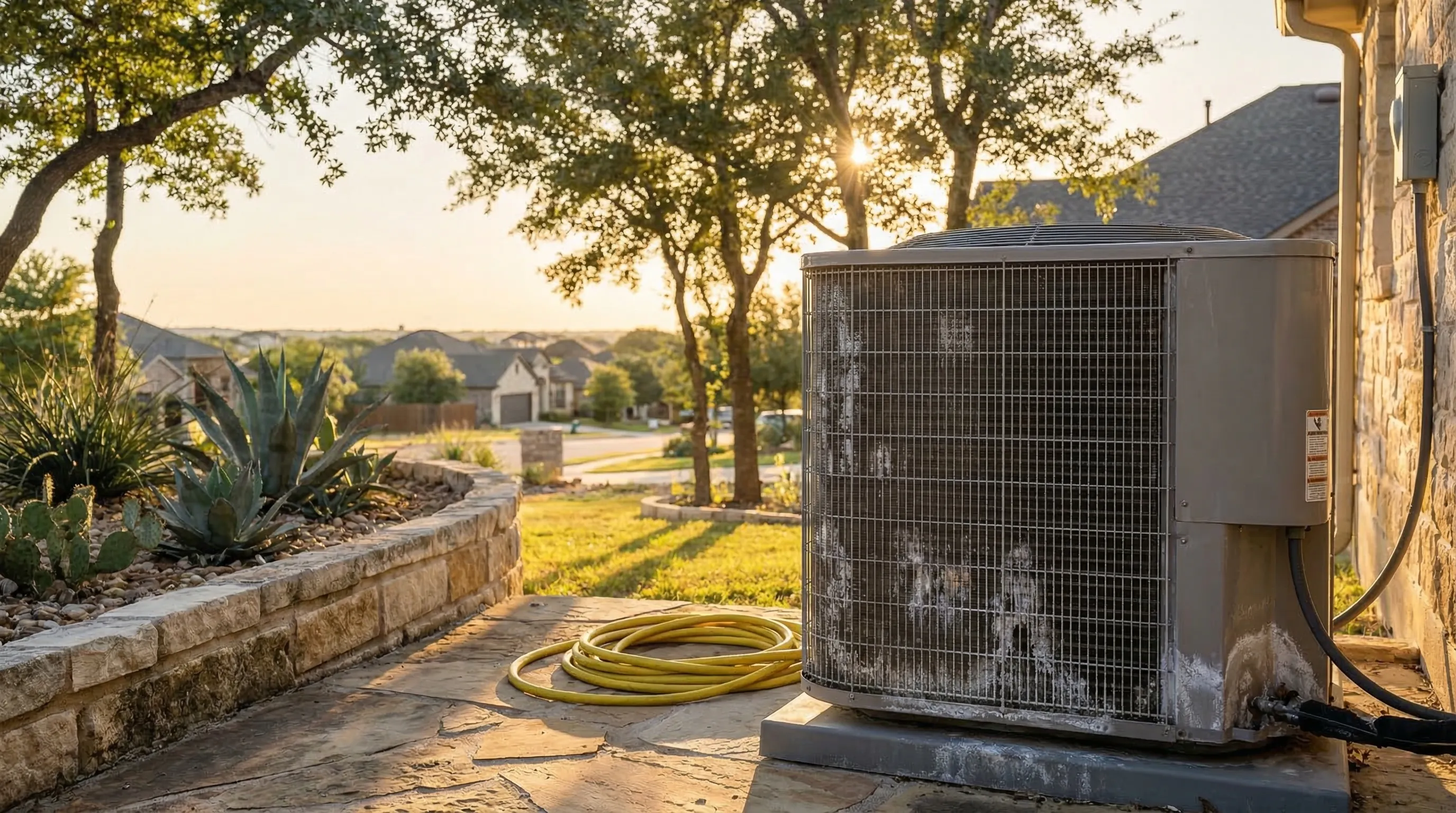
- •Hardened scale can eventually pit or corrode the copper tubing in the coils.
- •Clogged filters from high pollen counts force the system to pull harder, often drawing in more debris from around the unit.
This is why we always tell our neighbors that a simple hose-off is not enough. You need real, professional cleaning to get those minerals and that sticky pollen off the sensitive parts of your system. It is about more than just cooling. It is about the air your family breathes every day. A clean system is a healthy system, and in a city with very high pollen levels, you have to be extra diligent.
Protecting Your System Before the Summer Peak
Timing is everything in South Texas. We are currently in that sweet spot between the last freeze and the first hundred degree day. This mid-March window is the best time to take action. If you wait until July when everyone's AC is breaking down, you might be waiting in a hot house for a technician to show up. Right now, we can be more proactive. We recommend a thorough spring maintenance check to specifically look for signs of mineral damage and to clear out any pollen buildup from the early spring season.
During a maintenance visit, a trusted technician will check your condensate lines and the drain pan. We use specialized tools to ensure the lines are clear of any mineral obstructions. We also inspect the coils for any signs of scale. If we catch it early, it is a simple fix. If it sits there for years, it can become a permanent part of the coil, and then you are looking at a much more expensive replacement. Being honest and straightforward with our customers is how we have stayed in business since 2009. We would much rather help you maintain your current system than see you have to replace it years before its time.
Rebates and Financial Incentives for San Antonio Homeowners
If your system has already taken a beating from years of hard water and heavy use, you might be thinking about an upgrade. It is important to note that the federal 25C tax credits expired at the end of 2025. This means those big federal incentives are not on the table right now. However, we still have some great local options. CPS Energy continues to offer rebates for San Antonio residents who install high efficiency systems. These rebates can range from 100 to 275 dollars per ton depending on the efficiency rating of the new unit.
When you combine those rebates with the monthly savings on your energy bill, a new system can start to pay for itself pretty quickly. Modern units are also designed with better materials that can sometimes resist the effects of hard water better than the older models. If you are worried about your current unit making it through another San Antonio summer, now is the time to look at these local incentives. We can help you navigate the paperwork and make sure you get a fair deal on a system that is right for your home and your budget.
The Wrangler Way: Reliable Advice for Your Home
At Wrangler Air Conditioning, we believe in being a good neighbor. That means giving you the real facts about your home, even the parts that are not fun to talk about, like water hardness and mineral scale. We have been a part of this community for over fifteen years, and we have seen the San Antonio real estate market grow and change. With the median home price now around 332,000 dollars, your home is a major investment. Protecting that investment starts with taking care of the systems that keep it comfortable.
Do not let the hard water of the Edwards Aquifer take a toll on your comfort. Whether you need a quick tune-up before the 90 degree weather hits this weekend or you want an honest assessment of your system's health, we are here to help. We pride ourselves on being dependable and fair. We do not use high pressure sales tactics because we know that a job well done and a satisfied neighbor are the best forms of advertising. Give us a call and let us make sure your AC is ready for the long Texas summer ahead.
“Living in San Antonio means dealing with water that is as tough as a limestone trail. If you do not keep an eye on how those minerals interact with your AC unit, you are going to see higher bills and a shorter lifespan for your system. It is all about being proactive before the South Texas heat really kicks in.”
- Tex, the "Comfort Cowboy"
Frequently Asked Questions
Does a water softener help protect my HVAC system?
A water softener primarily protects appliances that use tap water directly, like your water heater or dishwasher. While it does not directly affect the condensate in your AC, it can prevent scale buildup if you have a whole-home humidification system or a swamp cooler that uses the house water supply.
How can I tell if hard water is affecting my AC unit?
Look for white, chalky deposits around your condensate drain line or in the drain pan under your indoor unit. If you notice your energy bills increasing without a change in usage, or if your system struggles to reach the set temperature, mineral buildup on the coils could be the culprit.
Why is my AC drain line clogging so often in the spring?
In San Antonio, spring brings a combination of heavy Live Oak pollen and mineral-rich dust. These mix with the moisture in your AC system to create a thick sludge. Without regular flushing, this mixture quickly clogs the narrow condensate lines and can cause water backups.
Are there specific CPS Energy rebates for AC maintenance?
CPS Energy typically focuses its rebates on equipment upgrades and high efficiency system installations rather than routine maintenance. However, regular maintenance ensures your system qualifies for its maximum efficiency rating, which is a requirement for most equipment rebates.
How often should I have my coils cleaned in San Antonio?
Due to our extremely hard water and high seasonal pollen, we recommend a professional coil inspection and cleaning at least once a year. Doing this in the spring, before the peak summer heat, is the best way to ensure efficiency and prevent breakdowns.
Related Services
AC Maintenance
The $89 tune-up that saves you from the $3,000 emergency. San Antonio families count on us to keep their systems running year after year.
AC Repair
When the AC quits on a San Antonio summer day, we're the call your neighbors make. Same-day service, upfront pricing, done right the first time.
AC Installation
San Antonio families trust us to install their new AC systems - from starter homes to the Dominion. No pressure, no upsells, just the right system for your home.
Need HVAC Help?
Our expert technicians are ready to help with any heating or cooling needs.